Press
Media
News stories, podcasts and interviews about my research. The same list, with the lab's news, is on labalab.li/media.
2026
8 items
The Jerusalem Post· 31 October 2026
Israeli study finds AI chatbots can identify unnecessary medical testsA joint study by Ben-Gurion University and Clalit Health Services found that leading AI chatbots can accurately identify unnecessary medical tests and interventions, helping curb clinical overuse.
The Jewish Chronicle· 23 October 2026
AI chatbots can identify unnecessary medical tests – but also exhibit ‘uncertainty’ of humans, study findsAI models ‘stumble’ when medical experts disagree. Dr Guy Laban warns that different chatbots can give sharply conflicting advice on identical cases.
ynet· 20 October 2026
שואלים את הצ'אט אם להיבדק? הוא מפתיע, אבל יש כוכבית גדולהynet on the Clalit and Ben-Gurion University study of whether AI chatbots know when a test or treatment is not needed, led by Dr. Dean Ariel and Dr. Guy Laban.
Mirage News· 20 October 2026
AI Chatbots Spot Unnecessary Tests, Struggle With Doctor DisagreementsSix commercial language models mostly avoided recommending unnecessary care in Choosing Wisely scenarios, but stumbled where doctors themselves disagree.
eurekalert.org· 20 October 2026
Does AI know when to say "no"? New study reveals AI chatbots recognize unnecessary medical tests, but stumble where human doctors disagreeBEER-SHEVA, Israel, October 20, 2026 – In an era where patients and clinicians increasingly turn to artificial intelligence for medical advice, a critical question emerges: does AI know when not to test or treat? A new joint study from Ben-Gurion University of the Negev (BGU) and Clalit Health Services reveals that leading Large Language Models (LLMs) successfully identify when medical interventions are redundant in the vast majority of cases, stumbling primarily in gray areas where medical consensus itself is divided. The peer-reviewed study was published today in Annals of Internal Medicine, the flagship journal of the American College of Physicians
VideoILTV News· 30 July 2026
How AI Will Change Israel ExplainedILTV Israel News and Americans for Ben-Gurion University: Dr. Guy Laban explains how AI can improve everyday life and why continued investment in the field is essential for Israel.
Globes· 25 January 2026
Unbeknownst to us, the humanoid robot arena has made a leap forwardGoogle DeepMind CEO Demis Hassabis warned at the Davos conference that China is only about six months behind leading Western laboratories in AI achievements, particularly in humanoid robotics. This article discusses the advancements in humanoid robots, China's significant investments in the field, and the implications for the West.
Ben-Gurion University of the Negev· 6 January 2026
Dr. Guy LabanBen-Gurion University of the Negev (BGU) introduces Dr. Guy Laban as one of its newest faculty members joining in 2025-2026.








2025
15 items
PodcastApple Podcasts· 14 November 2025
Guy Laban: What You'd Reveal To AI With Human NamesIndustrial engineering professor Guy Laban discusses his study which found that users disclose more information to AI chatbots when they are given human names.
PsyPost· 11 November 2025
Study finds users disclose more to AI chatbots introduced as humanResearchers found that when a chatbot is introduced as human, users tend to disclose more information and feel more comforted, even if they suspect it's not actually a person. This suggests that the framing of interactions with AI can significantly impact user behavior and perception, particularly in sensitive contexts like mental health.
Trinity Hall Cambridge· 22 October 2025
AI for goodThe societal impact of AI and the ethical considerations surrounding its use.
La Vanguardia· 24 September 2025
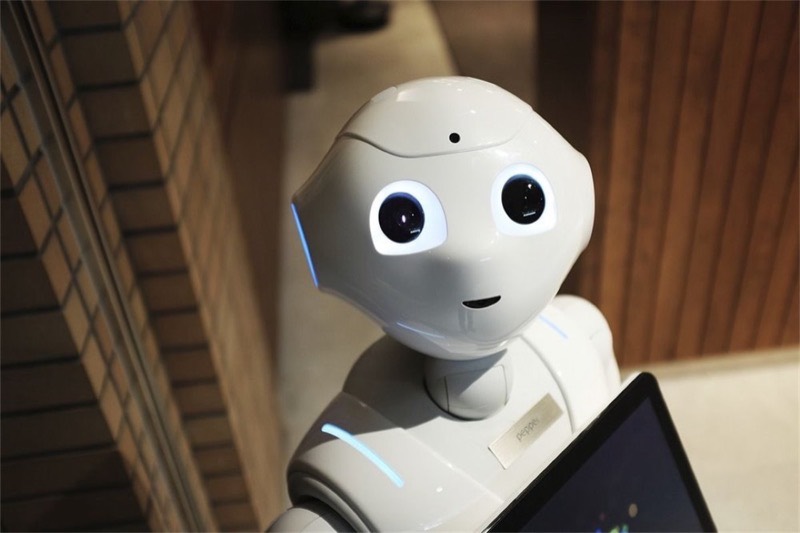
Dr. Guy Laban, investigador en Cambridge: “Hablar con un robot emocional puede aliviar la soledad y ofrecer algo muy necesario: un espacio propio para expresarse”Un estudio de la Universidad de Cambridge ha demostrado que las interacciones regulares con un robot social pueden aliviar la soledad y la sobrecarga emocional de los cuidadores. La investigación, publicada en el "International Journal of Social Robotics", utilizó a Pepper, el humanoide desarrollado por SoftBank Robotics, en un ensayo con cuidadores de personas dependientes en el Reino Unido.
Disability Insider· 16 September 2025
Social robots can help relieve pressures felt by carersInformal carers who talked regularly with the social robot Pepper felt less lonely and overwhelmed, and more in touch with their own emotions.
Open Access Government· 16 September 2025
Social robots in care: How AI companions support carersNew Cambridge research reveals that social robots can boost the emotional wellbeing of caregivers and alleviate pressure, potentially reshaping future caregiving practices. A study found that humanoid robots like Pepper can reduce stress, loneliness, and emotional burdens for informal caregivers by offering companionship and interactive support.
Knowridge Science Report· 16 September 2025
Talking robots could help ease the burden of caregiversResearchers at the University of Cambridge have explored how regular conversations with a humanoid robot could help informal caregivers. In a first-of-its-kind study, published in the International Journal of Social Robotics, the team found that chats with the robot not only gave caregivers a safe space to talk about themselves but also helped them feel less stressed and isolated.
Tech Explorist· 15 September 2025
Talking to robots helps carers feel less lonelyA study conducted at the University of Cambridge found that informal caregivers found comfort and were able to open up emotionally by conversing with a humanoid robot named Pepper. The conversations helped them reconnect with their own emotional needs, addressing the isolation and distress often experienced by caregivers.
myScience· 15 September 2025
Social robots can help relieve the pressures felt by carersA study by University of Cambridge researchers found that informal caregivers who regularly spoke with a humanoid robot experienced positive benefits, including reduced loneliness and improved emotional awareness. These conversations provided caregivers with a space to discuss their own challenges, which they often lack.
LUXAI· 8 April 2025
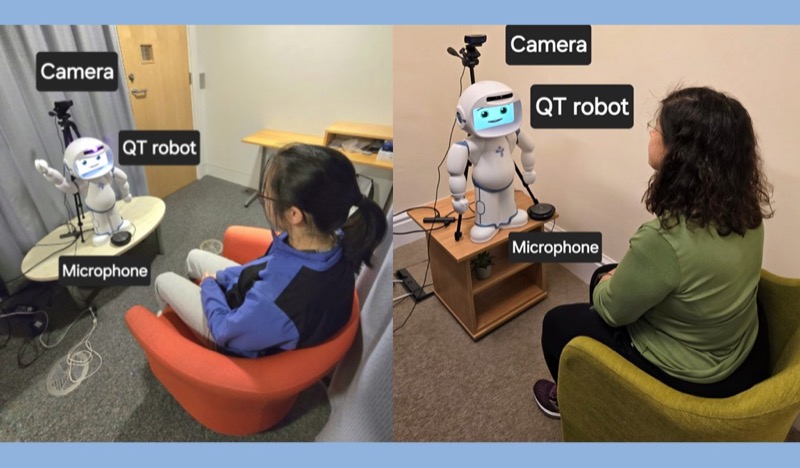
QTrobot Supports Emotional Growth: New Study Highlights the Role of Robots in Well-Being Interventions for StudentsResearchers at the University of Cambridge utilized the QTrobot to investigate its potential in fostering emotional development among students. The study, detailed in this article, reveals how robot-led conversations can enhance emotional regulation, expressiveness, and overall well-being.
Kent Live· 1 April 2025
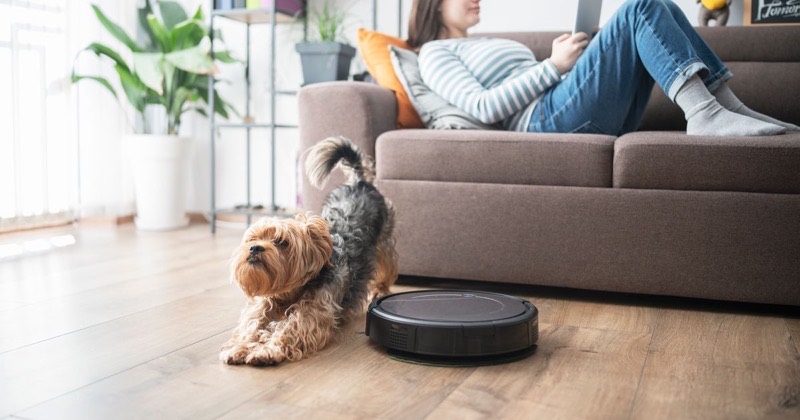
Brits show love for robot vacuums by giving them quirky pet names like Tony Shark and Mr CleanerAlmost half of British adults have given their robot vacuum a 'pet name', with 'Mr Cleaner' being the most popular choice. The study also found that naming their vacuums increased users' enjoyment of the gadget.
Cambridgeshire Live· 1 April 2025
Key reason why Brits are giving their robot vacuums 'pet names'A survey of 1,000 UK adults revealed that over half of robot vacuum owners affectionately name their devices, with many finding it adds fun and personalization to their cleaning routine. Popular names include variations of 'Robert' like Bob and Rob.
Derbyshire Live· 1 April 2025
Brits show love for robot vacuums by giving them quirky pet names like Tony Shark and Mr CleanerAlmost half of British adults have given their robot vacuum cleaner a 'pet name', with 'Mr Cleaner' being the most popular choice, as a new study reveals how these names increase user satisfaction.
Techprincess· 28 March 2025
Perché gli italiani si ostinano a chiamare Ambrogio il proprio robot aspirapolvere?Why people give their robot vacuums names, with comments from Dr. Guy Laban (in Italian).
ERT· 28 March 2025
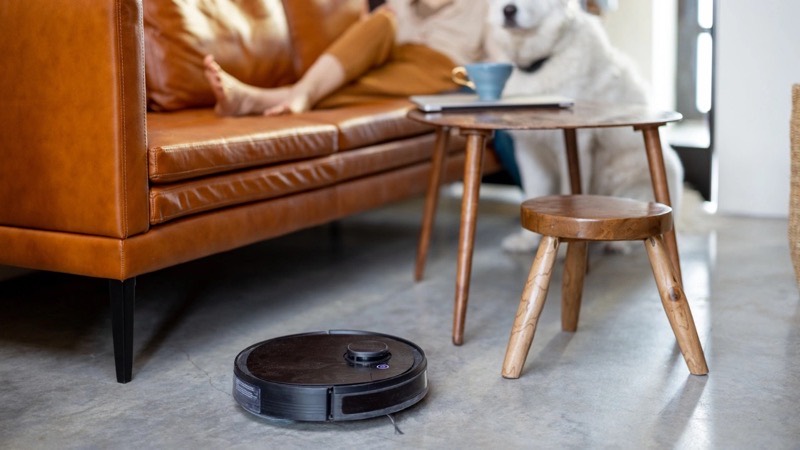
Consumers are giving their robot vacuums names, a study by Shark reveals!More than half of UK robot vacuum owners give their cleaning companions names. Dr Guy Laban explains why people bond with their robots.








2024
1 item
Andrew Bolwell· 2 July 2024
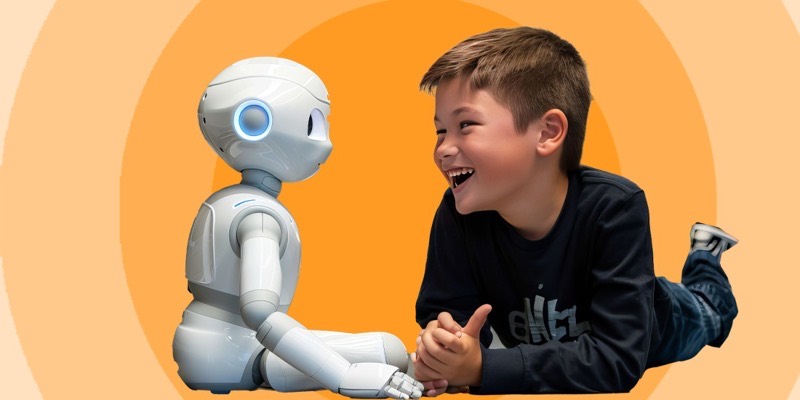
The rise of social and home robots: Transforming our lives with AI advancementsThis article discusses the emergence of social and home robots in our daily lives, highlighting their roles as companions, educators, and caregivers, and how they are transforming human-machine interaction. It also addresses the ethical and practical considerations of integrating these AI advancements into society.
2023
7 items
health and care.scot· 8 December 2023
Robots could play part in combatting lonelinessResearchers in Glasgow have discovered that 'social robots' may be an effective method for combating loneliness, with a new study showing that individuals who interact with them share more about themselves. They also reported feeling less lonely and disclosed more personal information.
digit.fyi· 5 December 2023
Could Talking to Robots Make Us Less Lonely?New research finds people who interact with social robots disclosed more about themselves over time and felt less lonely. The study from the University of Glasgow suggests social robots could be conversation partners to support emotional health.
heise online· 5 December 2023
Studie: Soziale Roboter im Kampf gegen Einsamkeit und MissstimmungEine Studie der University of Glasgow zeigt, dass Gespräche mit sozialen Robotern die Stimmung aufhellen und Einsamkeit entgegenwirken können. Teilnehmer empfanden sich nach Interaktion mit dem Roboter "Pepper" weniger einsam und bauten eine tiefere Beziehung zu ihm auf.
Holyrood· 4 December 2023
Robots could help ease loneliness in humans, study findsPeople who talked with the social robot Pepper over five weeks disclosed more about themselves and felt less lonely.
Laboratory News· 4 December 2023
Robots ‘offer effective intervention in combatting loneliness and negative emotions’Social robots used during the pandemic helped people struggling with isolation, stress and other difficult emotions.
myScience· 4 December 2023
Social robots could be an effective tool to combat lonelinessA new study reveals that people interacting with social robots disclosed more about themselves and reported feeling less lonely over time. The research, led by the University of Glasgow, suggests that these robots could help improve emotional health and combat loneliness.
University of Glasgow· 4 December 2023
Social robots could be an effective tool to combat lonelinessA new study led by the University of Glasgow found that people interacting with social robots over time disclosed more about themselves, experienced improved moods, and reported feeling less lonely. This suggests that social robots could be an effective intervention to support emotional health.


More
3 items
LuxAI S.A.
How QTrobot Helps People Feel Less Lonely and StressedA new study from the University of Cambridge shows that QTrobot, powered by large language models, can meaningfully reduce feelings of loneliness and stress through repeated supportive conversations. This report highlights QTrobot's impact on emotional well-being.
Mirage News
Social Robots Can Help Relieve Pressures Felt By CarersPeople who care informally for sick or disabled friends and relatives often become invisible in their own lives. Focusing on the needs of those they
Podcastאוניברסיטת בר-אילן
בינו לבינה מלאכותית, עידן הרובוטים - ד״ר גיא לבן וד״ר גל יעבץבפרק בסדרה ״בינו לבינה מלאכותית״ משוחח ד״ר גל יעבץ עם ד״ר גיא לבן על רובוטים חכמים הפועלים בעולם הפיזי והבנת הקשר בעידן הבינה המלאכותית.